


🌿 Comfrey – A Natural Plant Feed
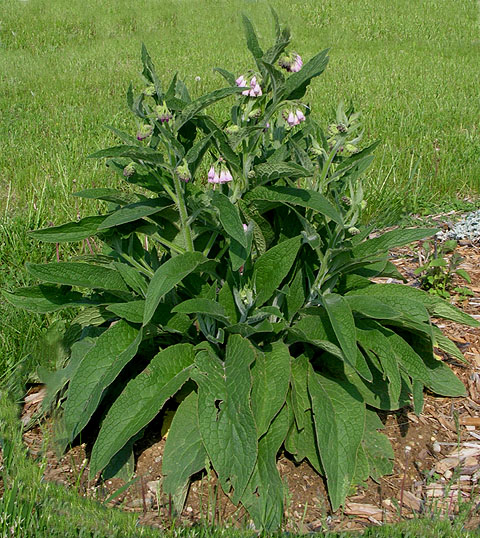
Comfrey is an excellent natural fertiliser and is particularly useful for fruiting and flowering plants.
It is naturally rich in potassium (K), which plants need for healthy flowers and fruit production. It also contains nitrogen (N) and other nutrients, making comfrey an excellent homemade liquid feed.
Comfrey feed can be particularly useful for tomatoes, peppers, courgettes, cucumbers and other fruiting crops during the growing season.
Comfrey is also known for its high mineral content and is sometimes described as a plant’s natural multi-vitamin. Its nutrient-rich leaves make an excellent addition to the compost heap as well as being ideal for making homemade liquid fertiliser.
🌱 Top tip: Comfrey is especially valuable once plants begin flowering and setting fruit, when they need a good supply of potassium to support healthy crops.
The black tub at the bottom receives the black gold!

🌿 Harvesting Comfrey
Wear gloves when harvesting comfrey, as the fine hairs on the stems and leaves can cause skin irritation.
A mature comfrey plant can be harvested four to six times a year, usually from spring through to autumn. Regular cutting also encourages fresh, vigorous growth.
Cut the leaves and stems and place them directly into your barrel or container, ready to make your homemade comfrey feed.

Cover the comfrey with a lid, allowing the weights to gently compress the comfrey and keep it submerged. This helps the leaves break down and release their nutrients into the water.


Finally, cover the barrel with a lid. This helps keep rainwater out, prevents the feed from becoming unnecessarily diluted and keeps leaves, debris and unwanted visitors from getting into the mixture.

💧 Using Comfrey Tea
Before using your homemade comfrey tea, dilute it with water at approximately 1:20.
That means using around 50ml of comfrey concentrate per litre of water.
For a standard 10-litre watering can, add approximately 500ml of concentrate, then top up with water.
Comfrey feed is particularly useful for plants that are producing flowers and fruit. Use it around:
- 🍅 Tomatoes and cucumbers
- 🥒 Courgettes and squashes
- 🫐 Fruit bushes
- 🍎 Fruit trees
- 🌸 Flowering plants
The potassium-rich feed can help support flowering, fruit set and fruit development, making it particularly useful once plants begin flowering and producing crops.
🌱 Top tip: Apply the feed around the base of plants rather than directly onto the leaves, preferably when the soil is moist.